One record, from the tap to the shelf.
Sapline runs the whole operation — laying out the bush, the season itself, bottling and sales, and the paperwork behind all of it — on one set of records.
Same run, three places. The 412 gallons off the ridge line on March 12 is the lot code on the bottle and the line on page four of the inspection pack. Nobody typed it three times.
Six areas. One set of records underneath.
Three of them follow the season in order. Three never stop. Find your own problem in here and go straight to it.
- Tubing planner
- Mainline sizing by slope
- Parcel claim from state records
- Tapping zones
- Terrain and slope layers
- Sap-flow forecast
- Freeze-thaw weather
- Morning brief of deadlines + weather
- Collection logs with brix
- Boil logs linked to the sap that made them
- Yield ratios
- Bottling runs
- Lot codes on every bottle
- Label generation
- Barrel tracking
- Mass balance
- Bulk buyers
- Pre-season checklist
- Calibration due dates
- Fuel logs
- Consumables
- Equipment report PDF
- Six programs with readiness scores
- The whole inspection pack as one ZIP
- Policy generation
- Allergen assessments
- Visitor logs
- OCR of your paper collection sheets
- Cost per gallon
- Profitability
- Land Link (beta)
Every stop hands its records to the next one and out to the year-round rail. Nothing is re-entered along the way.
Everybody keeps a binder of collection sheets.
Photograph the day's sheet before you leave the sugarhouse. Sapline reads the rows — date, location, gallons, brix — and they land in the season total.
The binder you already keep, without the evening at the kitchen table. That 412 is the same 412 that ends up on a lot code.
Ask ten producers what a gallon costs them. You'll get ten guesses.
The ones deciding whether to hang another two thousand taps need the real number most, and it's the one nobody has.
Bulk was $2.42/lb this spring. At 11 lb to the gallon that's $26.62 back. This operation is a dollar and change underwater on bulk and makes it up at retail.
Lay out the bush before you carry a roll of tubing.
Draw mainlines and laterals over your own property. Sapline sizes mainline by slope and length, plans the runs and the corridors you'll cut, and keeps tap counts by section so the plan matches what you actually installed.
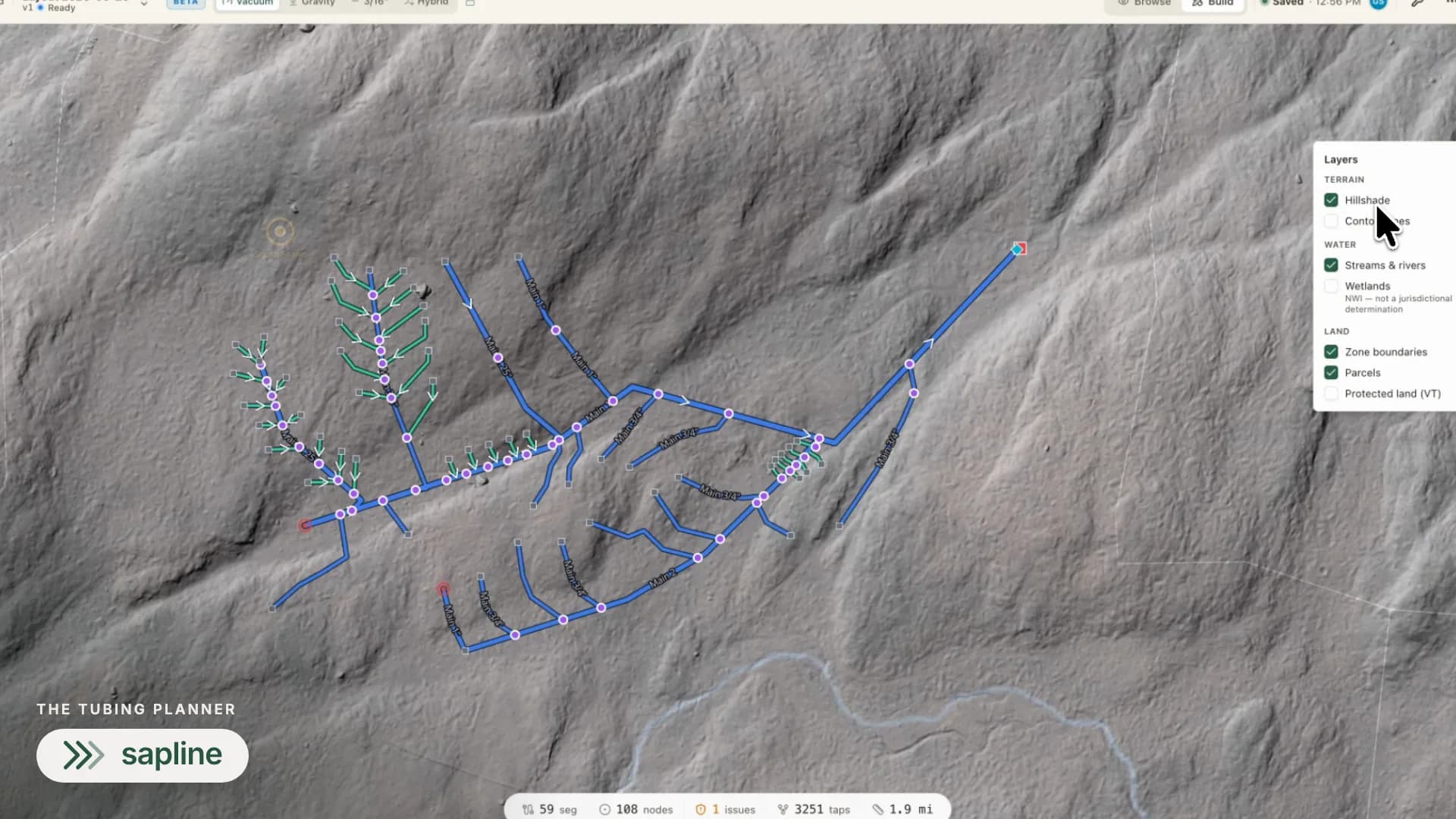
Layout and planning only. Sapline does not read your vacuum lines or your tanks — what it holds is the plan you drew and the counts you gave it.
One lot code answers the whole question.
The inspector reads a number off a bottle. You type it in and get the bottling run, the draw-off, the sap it came from, and the mass balance that ties them together — then download the pack.

17 calculators. No account, no email.
Open to anybody, whether you ever sign up or not. Bookmark the ones you use.
Also free: a 40-term maple glossary — the words that show up in grading rules, inspection forms and equipment manuals, written plainly. 30-term maple glossary